From sheet metal storage directly to processing and dispatch
Searching for, transporting and manually loading sheet metal? At Kerschgens, this is largely a thing of the past. With a connected automation solution from KASTO, the metal distributor links its sheet metal storage directly with laser cutting and order picking for dispatch. At the heart of the system is the automated UNILINE sheet metal storage system, which, together with intelligent warehouse management software and automated sheet metal handling, controls two separate material flows. This ensures that sheets reach their destination without unnecessary detours, reduces manual work and relieves employees of physically demanding tasks.
Carlier Blechbearbeitung & Mehr
Brand of Kerschgens Werkstoffe & Mehr GmbH
From individual sheets to ready-to-install assemblies: under the Carlier brand, Kerschgens combines extensive expertise in sheet metal processing. At its Stolberg site near Aachen, the metal distributor brings together planning and design with modern manufacturing processes such as CNC laser cutting, forming and welding. Its range of services also includes surface finishing, quality assurance and logistics. To link these processes more efficiently, Kerschgens has brought its sheet metal processing and material logistics together in a new 12,000-square-metre facility.
In the video: Automated sheet metal processing and order picking
How does sheet metal get from storage to the laser cutting machine or directly to dispatch without manual intermediate steps? At Kerschgens, the automatic UNILINE sheet metal storage system provides the material for two separate process routes. On one side, sheets are automatically separated and fed to the laser cutting machine. On the other, the KASTOpick sheet sheet metal manipulator handles customer-specific order picking for dispatch directly from the storage system. The KASTOlogic warehouse management software coordinates both processes. The result: fewer manual steps, shorter transport routes and safer sheet metal handling.
Would you like to automate your sheet metal logistics?
Whether you are looking for an automated sheet metal storage system, a direct connection to laser processing or automated order picking for dispatch, I would be happy to advise you personally and show you how KASTO can efficiently link your storage and material flow processes.
Direct from sheet metal storage to processing
With solutions from KASTO, Kerschgens has automated two key sheet metal logistics processes: material supply for laser cutting and customer-specific order picking for dispatch. This is made possible by a connected system comprising the UNILINE sheet metal storage system, the KASTOpick sheet sheet metal manipulator and the KASTOlogic Warehouse Management System. Together, they support storage and retrieval, material flow, production and order picking, thereby reducing manual effort.
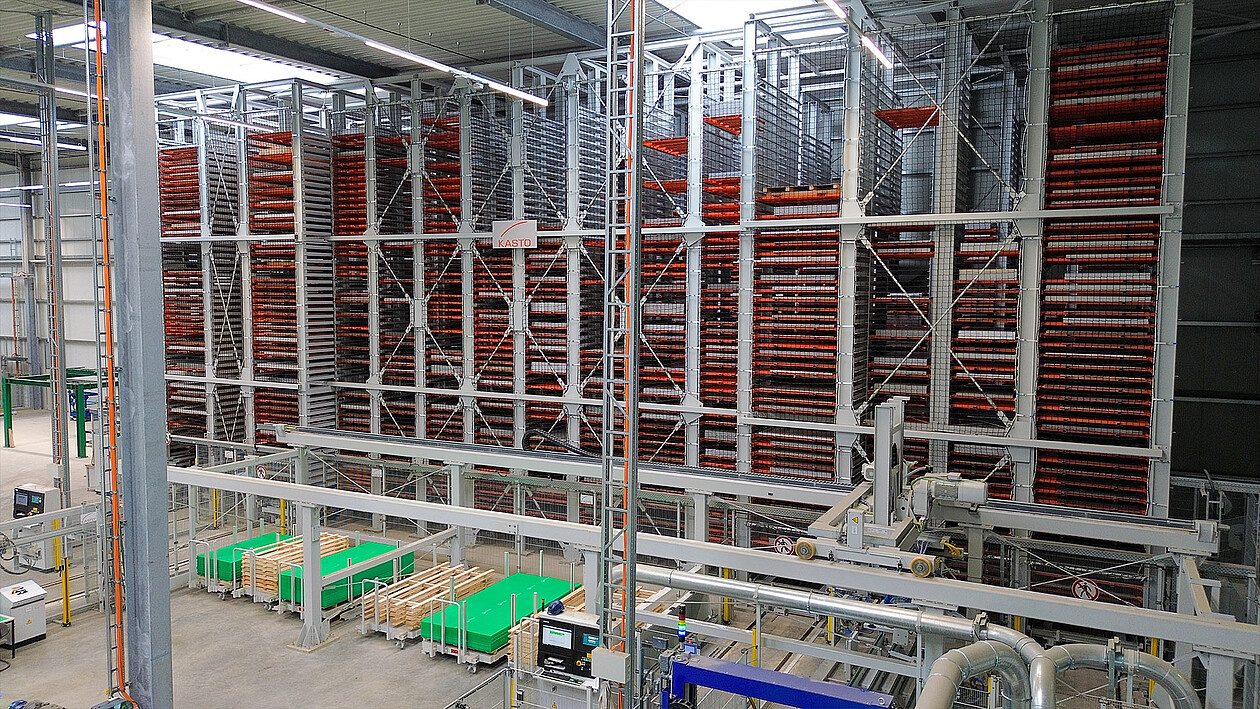
White steel frames, orange cassettes and clearly marked routes: the new hall at the Kerschgens site in Stolberg near Aachen has a calm, well-organised appearance. In the narrow aisle of the UNILINE in-line storage system, the storage and retrieval machine (SRM) travels to a load carrier and transports the stack of sheets to the transfer station at the roller shutter door. Behind it, a vacuum manipulator picks up an individual sheet and transfers it to the laser cutting machine. Travelling, lifting, gripping and depositing – every movement follows a fixed sequence. The material flow for laser cutting ends at the retrieval station, where the rake manipulator deposits the processed parts. Separately, on the east side, the KASTOpick sheet manipulator picks orders for dispatch directly from the sheet metal storage system.
The family-run Kerschgens Werkstoffe & Mehr GmbH celebrates its 150th anniversary in 2026. The company employs around 220 people across its headquarters in Stolberg near Aachen and its Bitburg site. It supplies steel, stainless steel and non-ferrous metals to customers in sectors including structural steel and metal construction, mechanical engineering, construction and other areas of the metalworking industry. Under the Carlier brand, Kerschgens brings together its expertise in sheet metal processing and assembly, from planning and design through to ready-to-install products. Its range of services includes CNC laser processing, forming, welding and surface finishing, as well as quality assurance and logistics.
Short distances, high capacity
To improve efficiency, Kerschgens planned the construction of Hall 2 with an area of 12,000 square metres. The company wanted to close three external storage facilities and consolidate its processing operations at a single location. Before the UNILINE was commissioned, employees first had to locate the material, transport it to the processing machine using an industrial truck and load it manually. After cutting, further manual transport and order-picking steps were required. This process tied up personnel, extended material provision times and increased the risk of injury when handling sharp-edged sheets. “Since 2008, KASTO has consistently impressed us with its expertise and customised solutions. With the UNILINE, we are continuing this successful collaboration,” says Managing Director Felix Herbort.
The automatic UNILINE storage system went into operation in January 2026. It provides 1,734 cassette locations for sheet metal and perforated sheets made of steel, stainless steel and aluminium, ranging from small to large formats. Material thicknesses range from 0.5 to 20 millimetres. Kerschgens also prepared the foundations of the new sheet metal storage system for a future expansion of around 1,000 additional locations.
One storage system, two material flow directions
KASTO material flow solutions complement the processes surrounding the UNILINE: delivered sheet metal packs are separated from the wooden pallet on an unpacking table and prepared for storage. Thanks to a hydraulic centring unit, the stack can be aligned precisely, placed on the designated cassette and transferred into the storage system via the longitudinal station. The storage and retrieval machine (SRM) takes over the load carrier and transports the pack into storage. The UNILINE features output stations on both longitudinal sides. From there, two separate material flows continue – one for laser machine loading and one for order picking for dispatch.
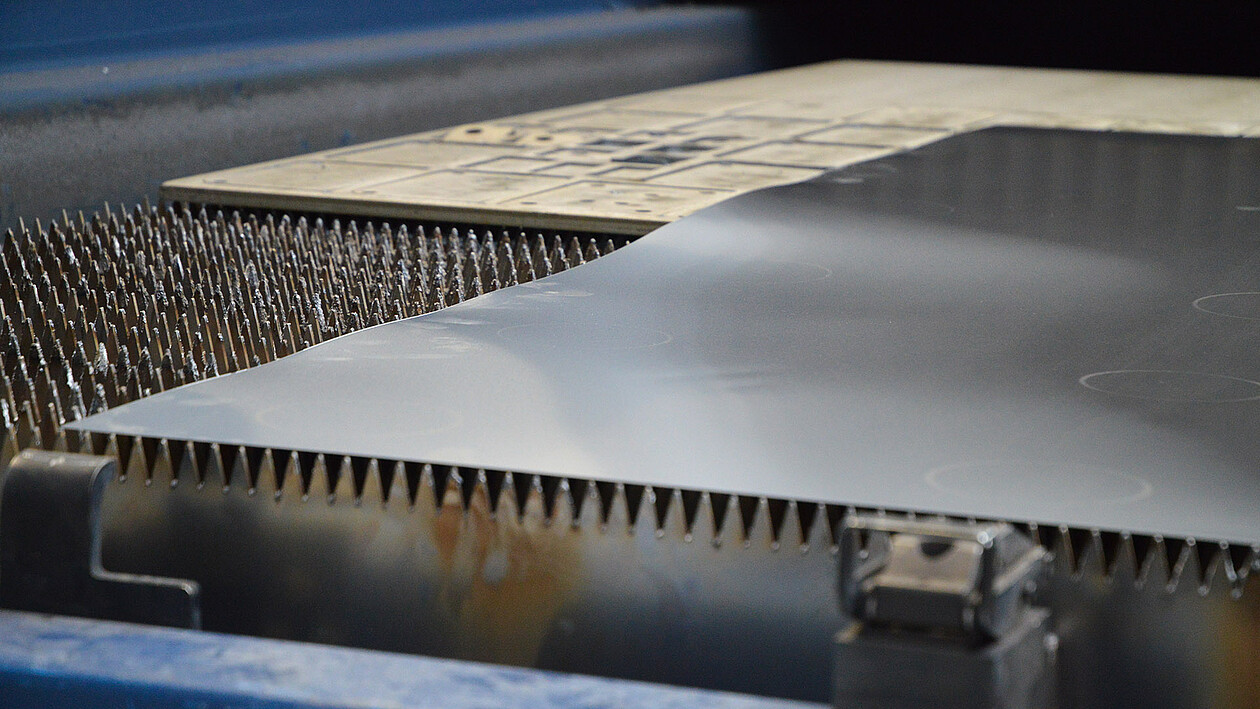
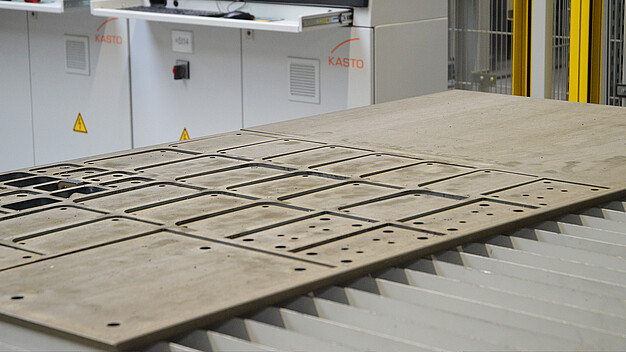
On the west side, the UNILINE supplies the laser cutting machine in the adjacent production hall. To do this, the longitudinal transfer carriage moves out of the storage system through a roller shutter door and positions the stack beneath the conveyor line. The manipulator with machine connection separates the sheets and transfers them to the pallet changer of the processing machine. Once cutting is complete, the rake manipulator picks up the processed workpieces and places them at the designated destination station. “The sheets are transported automatically from storage to the laser cutting machine, where they can be processed directly without any further manual steps,” says Felix Herbort, summarising the process.
Order picking for dispatch directly from sheet metal storage
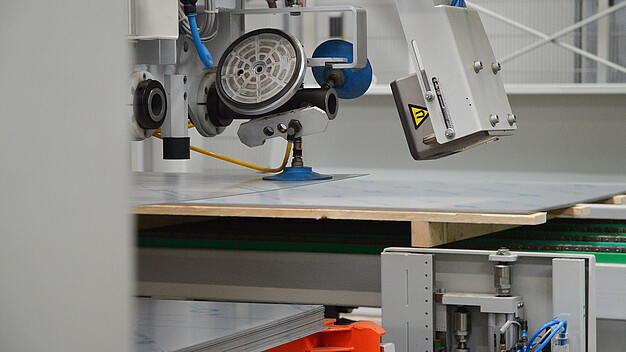
On the east side, the KASTOpick sheet order-picking manipulator places the sheets onto pallets ready for dispatch. To do this, it automatically selects the appropriate suction cups for oily, clean or textured sheets and can reposition the suction cup rows to accommodate different formats. For sheets, particularly those made of aluminium, an extraction system removes the paper interlayers and shreds them.
An automatic interlayer handling system protects sensitive surfaces with a plastic sheet. For batch separation and packaging, the manipulator provides wooden pallets and plastic covers. The gripper retrieves top cartons from a buffer and places them on the stack.
Finally, the strapping system secures the packages for dispatch, while a robot applies the labels. The system then transports the finished packages to the goods-out area. “The automated processes relieve us of a great deal of physical work. Heavy sheets and those with sharp edges in particular can be handled more safely in this way. This leaves us more time for tasks where our experience is needed,” says production employee Markus Hess.
For perforated sheets and grilles, Kerschgens deliberately retains the manual process outside the KASTO storage system, as they cannot be handled reliably using vacuum suction cups. The company has therefore set up a manual station that connects this process step to the automated storage system.
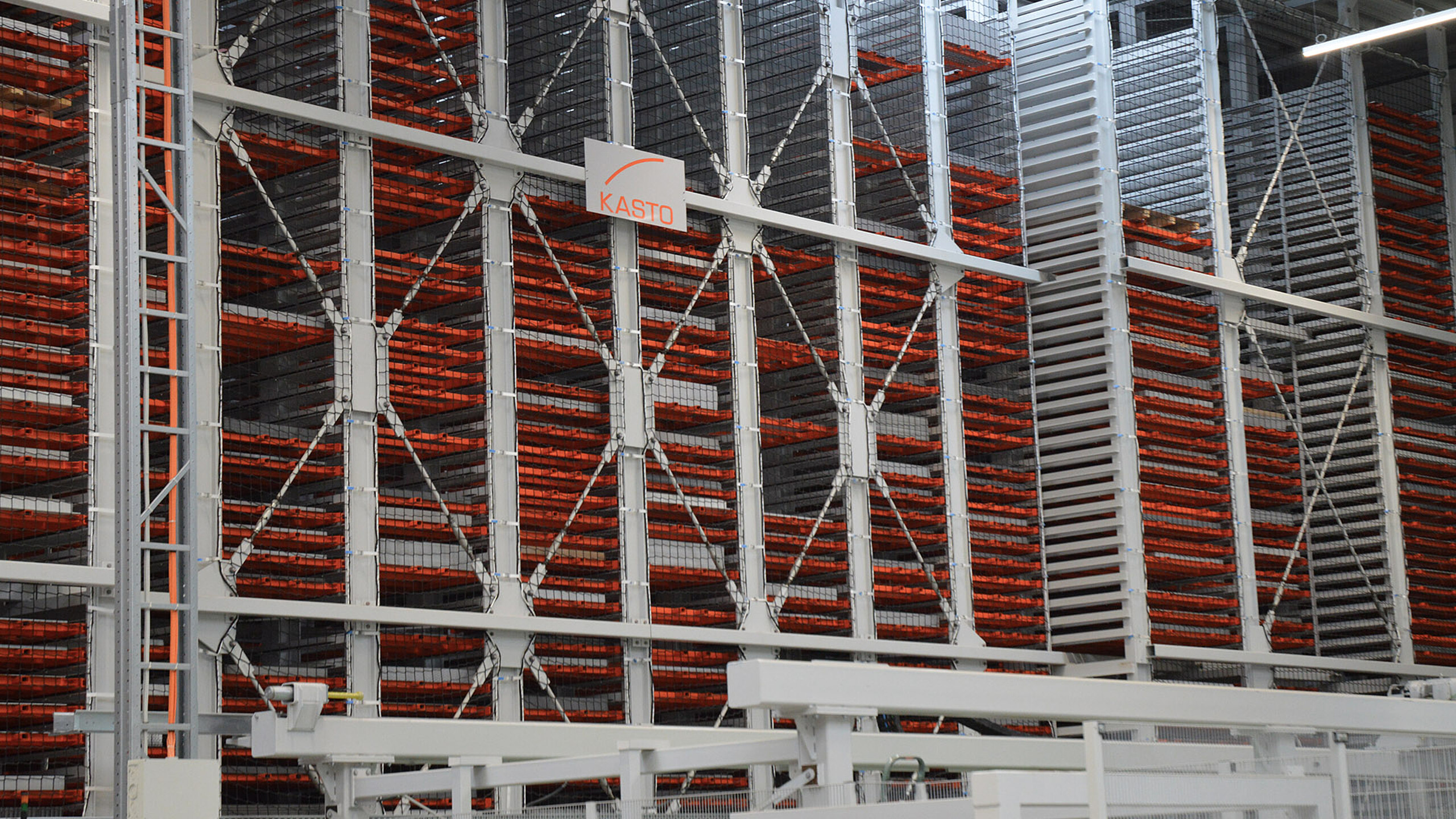
Automated storage solution
UNILINE provides 1,734 cassette locations for sheet metal and perforated sheets made of steel, stainless steel and aluminium, in formats ranging from 2,000 × 1,000 to 3,000 × 1,500 millimetres.
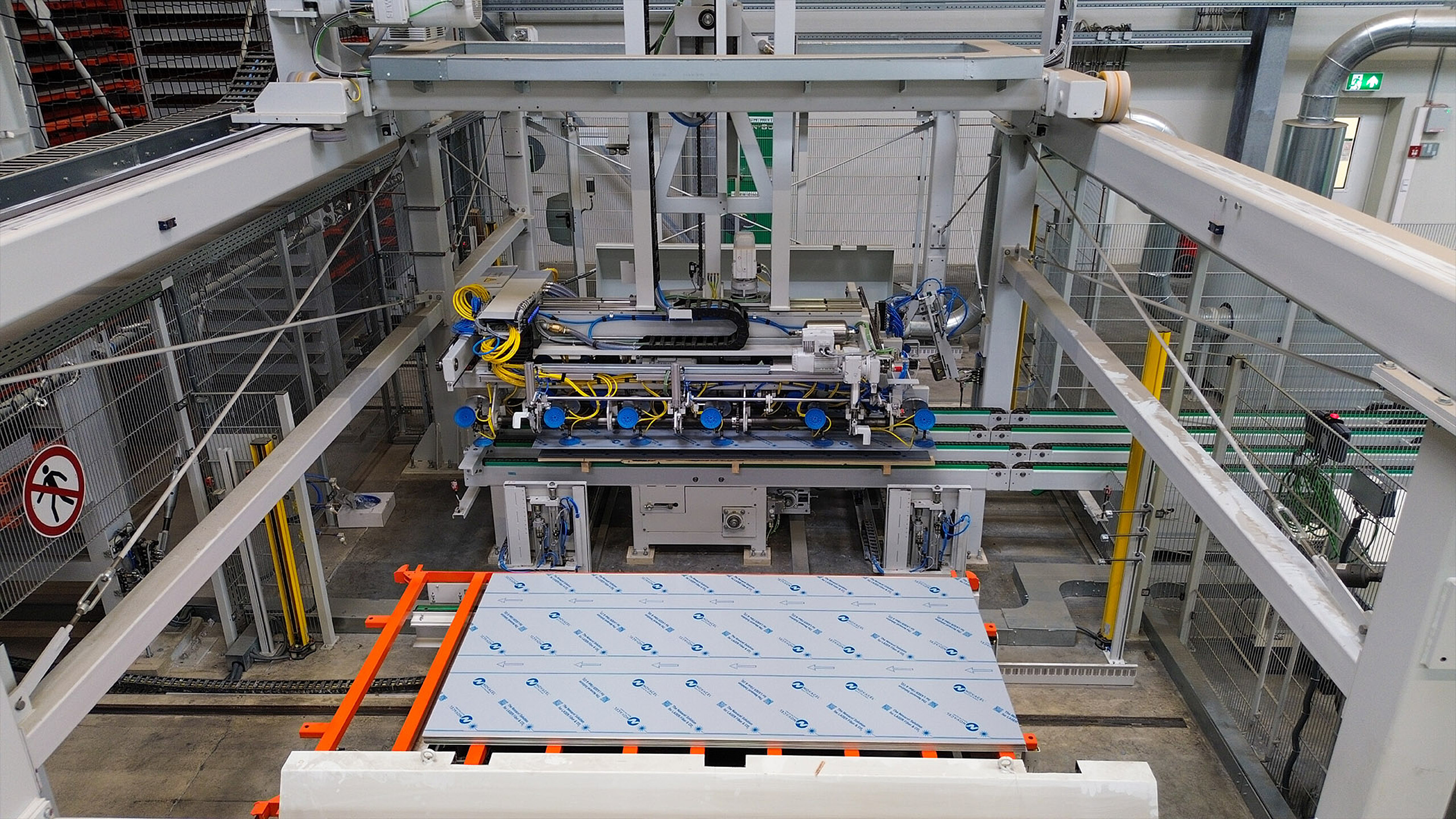
Vacuum handling with KASTOpick sheet
The vacuum grippers handle different types of sheet metal reliably, gently and precisely.
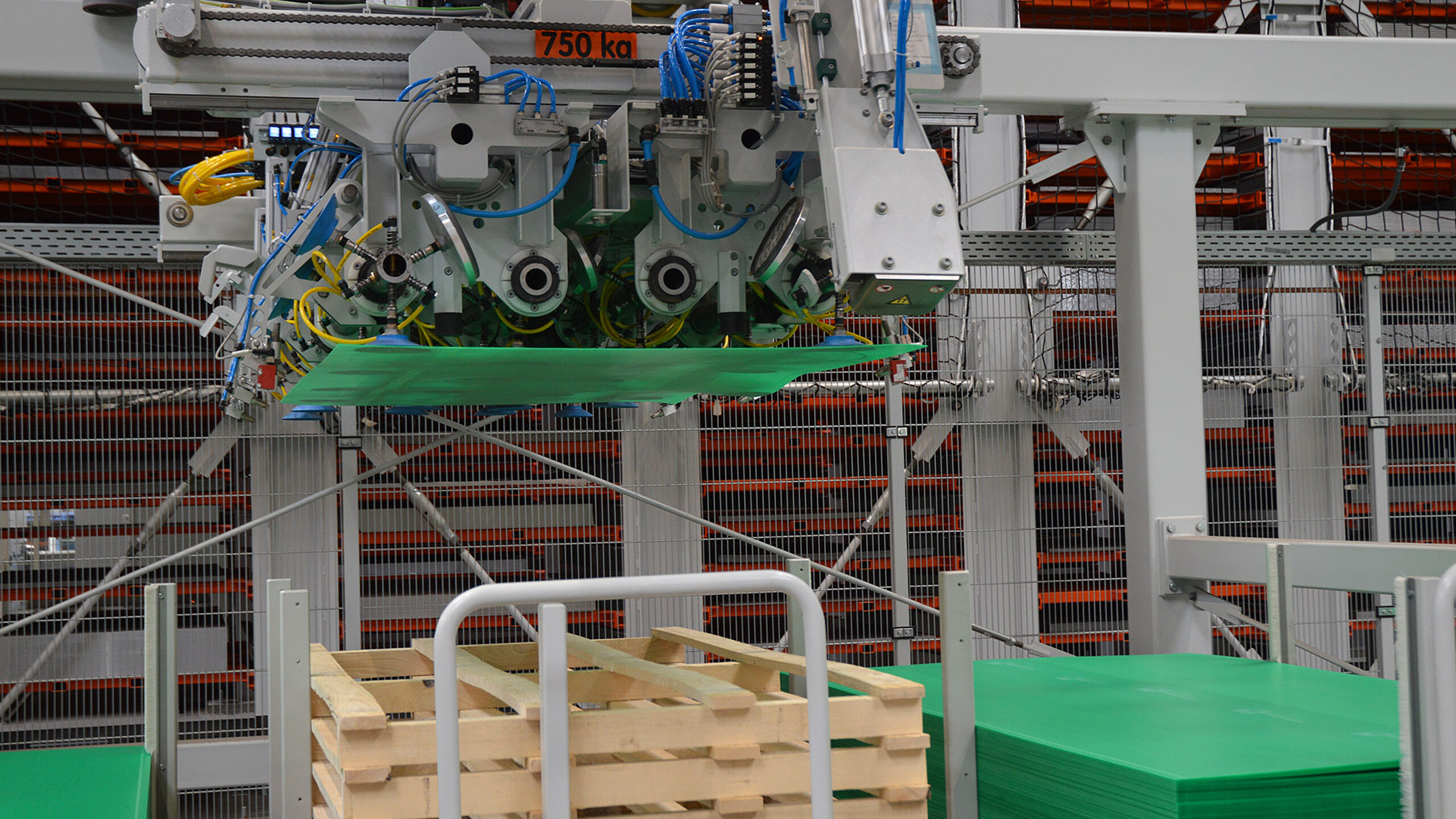
Automated order picking
Thanks to automatic interlayer handling, sensitive surfaces are reliably protected.
KASTOlogic controls both process routes
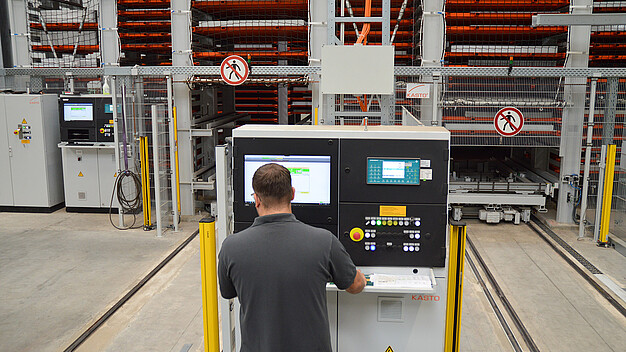
The KASTOlogic Warehouse Management System (WMS) manages stock levels, processes order data and determines which material is provided for processing or dispatch. To do this, the WMS connects the storage technology with the ERP systems used by Kerschgens (SHCware) and Carlier (Octoflex). It is also linked to the Oseon production planning system. Cutting plan data, remnants and packaging specifications are likewise incorporated into the control process. Integrating the different systems required the coordination of various data flows. The interfaces exchange information on upcoming orders and prioritisation, map the return of remnants to storage and batch transfers, and integrate the automated laser cutting and packaging processes. KASTOlogic also recognises technical restrictions: perforated sheets, for example, are not approved for laser processing.
“One of our strengths is the manufacturer-independent integration of processing machines,” explains Toni Schippel, Project Manager at KASTO. “The Kerschgens project shows how we connect different systems and ensure seamless data exchange between storage, processing and packaging.”
The WMS also handles packing optimisation: a specially developed algorithm calculates the optimum composition of each packing unit. In doing so, the software takes physical constraints and customer-specific requirements into account. Employees no longer need to search for materials and orders in different places. KASTOlogic provides the required information and the right material at the right place.
With the new system, Kerschgens brings storage, production and dispatch together. It links two separate process routes: material supply for laser processing and order picking for dispatch directly from the sheet metal storage system. For Managing Director Felix Herbort, this is the key advantage: “With the new solution, we can expand our sheet metal processing operations without having to organise every additional material flow manually.” The planning also goes beyond current requirements. This means the metal distributor can expand its storage capacity at any time if required, as provision has already been made for a future extension.