How a central storage system is setting a new pace for production and dispatch
With the construction of its new campus in Romanshorn, Forster has not only relocated its site, but completely rethought its material flows. At the heart of the new production facility is an automated honeycomb storage system from KASTO, which supplies both production and dispatch. Short routes, fast cycle times and clearly structured processes make the storage system the centrepiece of the hall – and a decisive element in achieving greater efficiency, safety and process stability.
Forster Profilsysteme AG
Forster Profilsysteme AG is a Swiss systems provider for steel and stainless steel profiles and develops supporting systems for doors, windows and façades. With the construction of its new campus in Romanshorn, the company seized the opportunity to realign its production from the ground up. The aim was to combine safety, sustainability and efficiency in profile production even more consistently.

Challenge: reorganising material flows in profile construction
At the previous site, the teams worked with a space-intensive storage system and long routes between storage, production and dispatch. For Forster, the task was therefore to restructure the material flows around profile production, separate processes more clearly and significantly improve the supply of materials to the workstations. At the same time, the solution had to be high-performance, cost-effective and precisely tailored to the company’s processes.

Solution: central storage concept with KASTO as partner
Together with KASTO, Forster opted for a centrally located production and order picking storage system. The honeycomb storage system UNICOMPACT 2.5 supplies production and dispatch directly, while the existing UNITOP 1.5 continues to be used for opened bundles. KASTO impressed not only with its technology, but also with its experience, precise process analysis and well-conceived automation solution from a single source.
Highlight: short routes, fast cycles, strong impact
The result is a system in which ten stations, short changeover times and clearly managed material flows work together perfectly. Each point of demand is supplied directly from the UNICOMPACT 2.5, material reaches the right place quickly and manual intervention is reduced. A particularly strong feature: the storage system was integrated into a pit, bringing the hall layout, stability and sustainable energy use together to optimum effect.

The heart of production: Forster focuses on smart warehouse technology
In 2024, Forster Profilsysteme AG, a Swiss system supplier, built its new production facilities on the greenfield site while also reassessing its processes and material flows. The core component of the new plant in Romanshorn is the automated UNICOMPACT honeycomb storage system from KASTO. This system efficiently supplies both the production and shipping departments while minimising transport distances and setting the pace in production. This project exemplifies the ideal collaboration of technology, planning, and teamwork.
Forster Profilsysteme AG specialises in fire and smoke protection, alongside burglary and bullet resistance. They offer steel and stainless steel profiles that combine safety and design seamlessly. This Swiss company develops and manufactures metal load-bearing systems for doors, windows, and curtain walls.
In 2018, Forster, which employs approximately 320 people, was acquired by the Belgian family-owned Reynaers Group. In 2024, the system supplier celebrated its 150th anniversary and relocated from Arbon to Romanshorn, which is situated ten kilometres away on Lake Constance. The new Forster Campus was built on a greenfield site, allowing the company to completely restructure its production processes and place a greater emphasis on sustainability.
The campus received both LEED Gold and Platinum certifications, which are globally recognised seals of approval for sustainable construction. LEED evaluates the energy efficiency and environmental performance of buildings. Achieving this certification is a crucial aspect of the company's sustainability strategy. In its production processes, Forster emphasises the use of recyclable materials, CO2-reduced steel, and self-generated renewable energy. Notably, "Green Steel" was utilised in the construction; this type of steel is made from recycled scrap using an electric arc furnace, which significantly reduces CO2 emissions.
Automated storage solution
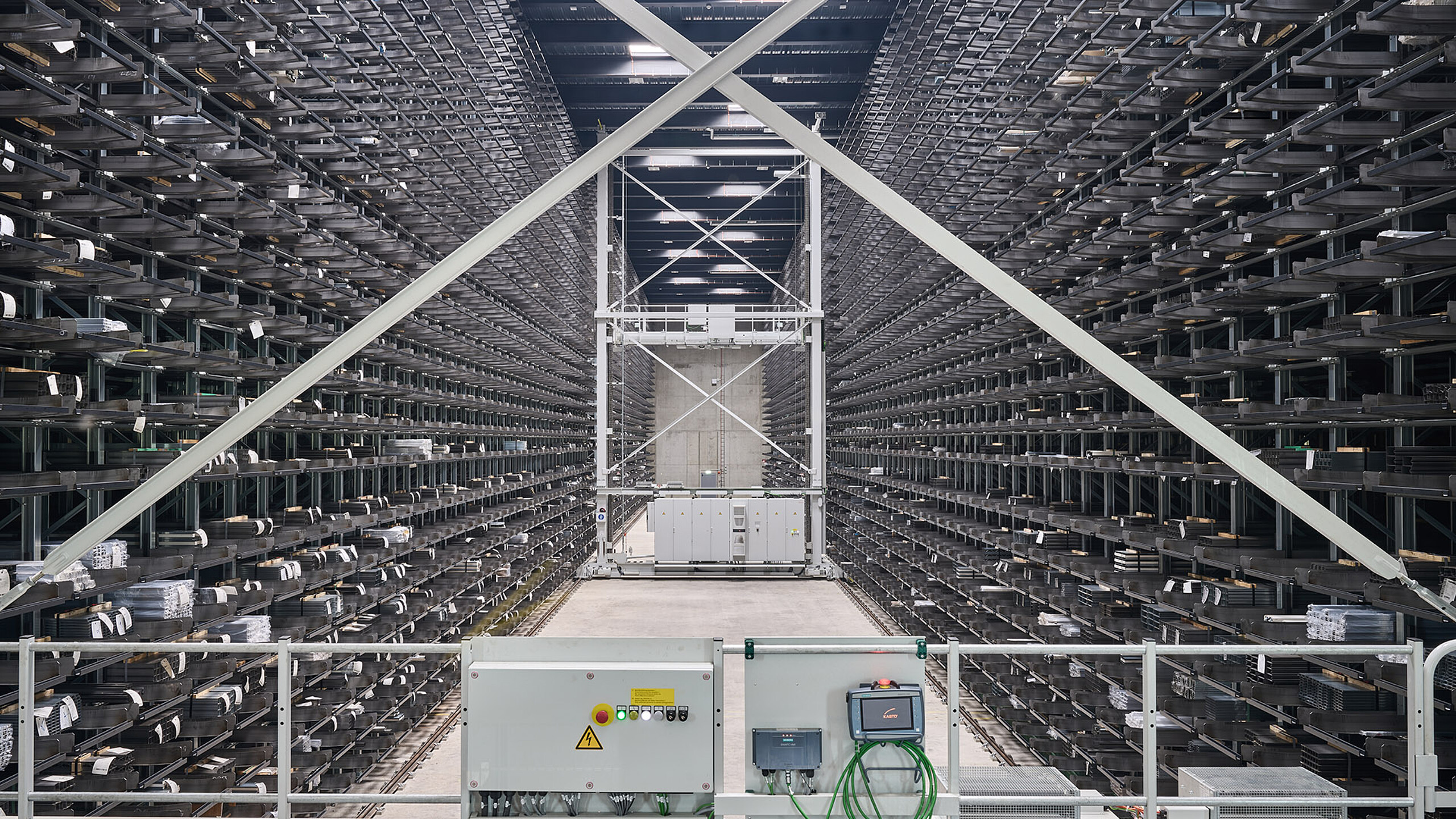
The UNICOMPACT 2.5 storage system from KASTO featuring 5,165 storage locations, is 98 metres long, and features two operating gantry cranes, fulfils all requirements. Photo credit: Thomas Hary, Magazin LEADER, MetroComm AG
Optimised production
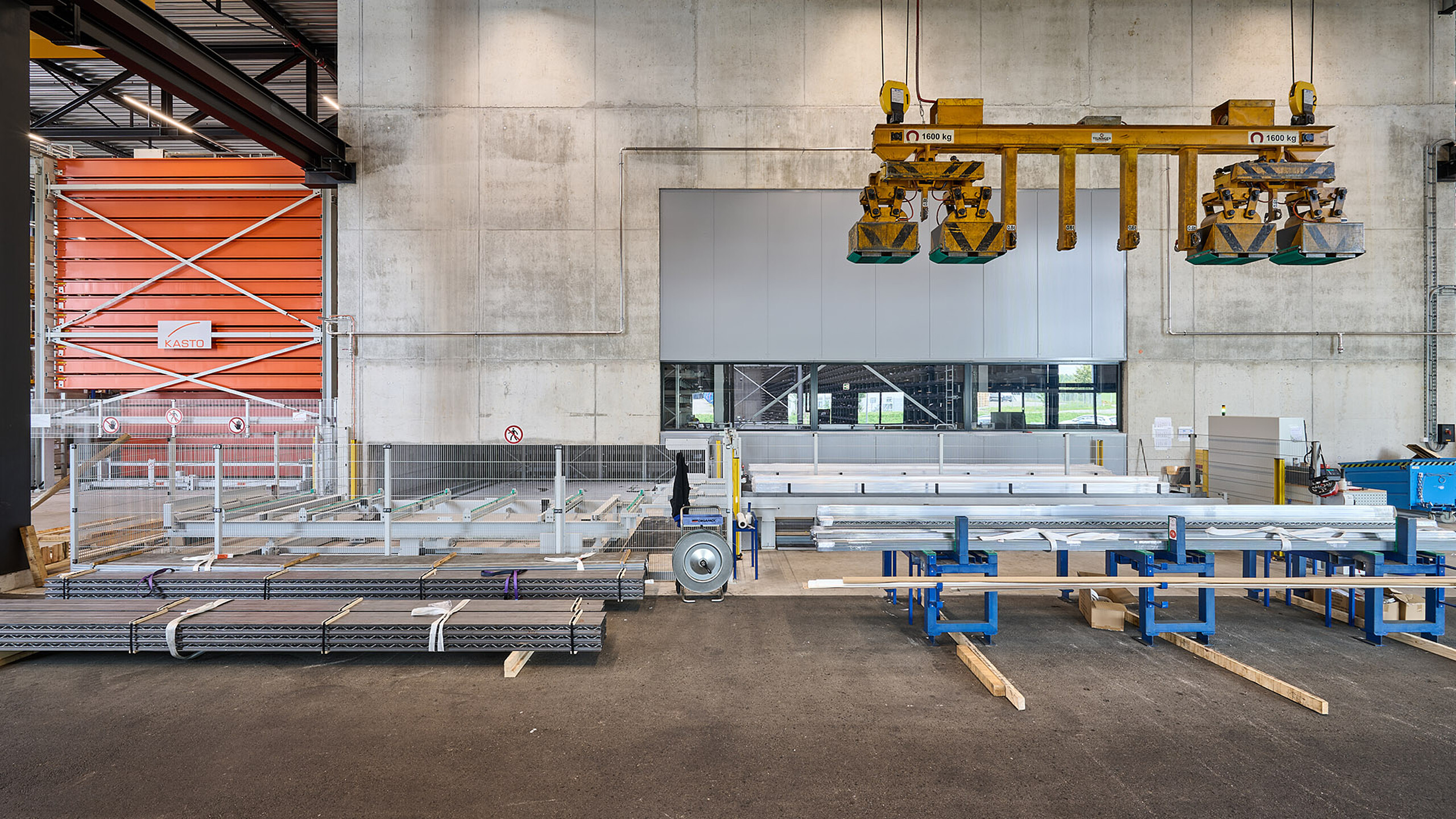
Short distances are the hallmark of Forster's new production facility. The UNICOMPACT honeycomb storage system is the core component of the system. Photo credit: Thomas Hary, Magazin LEADER, MetroComm AG
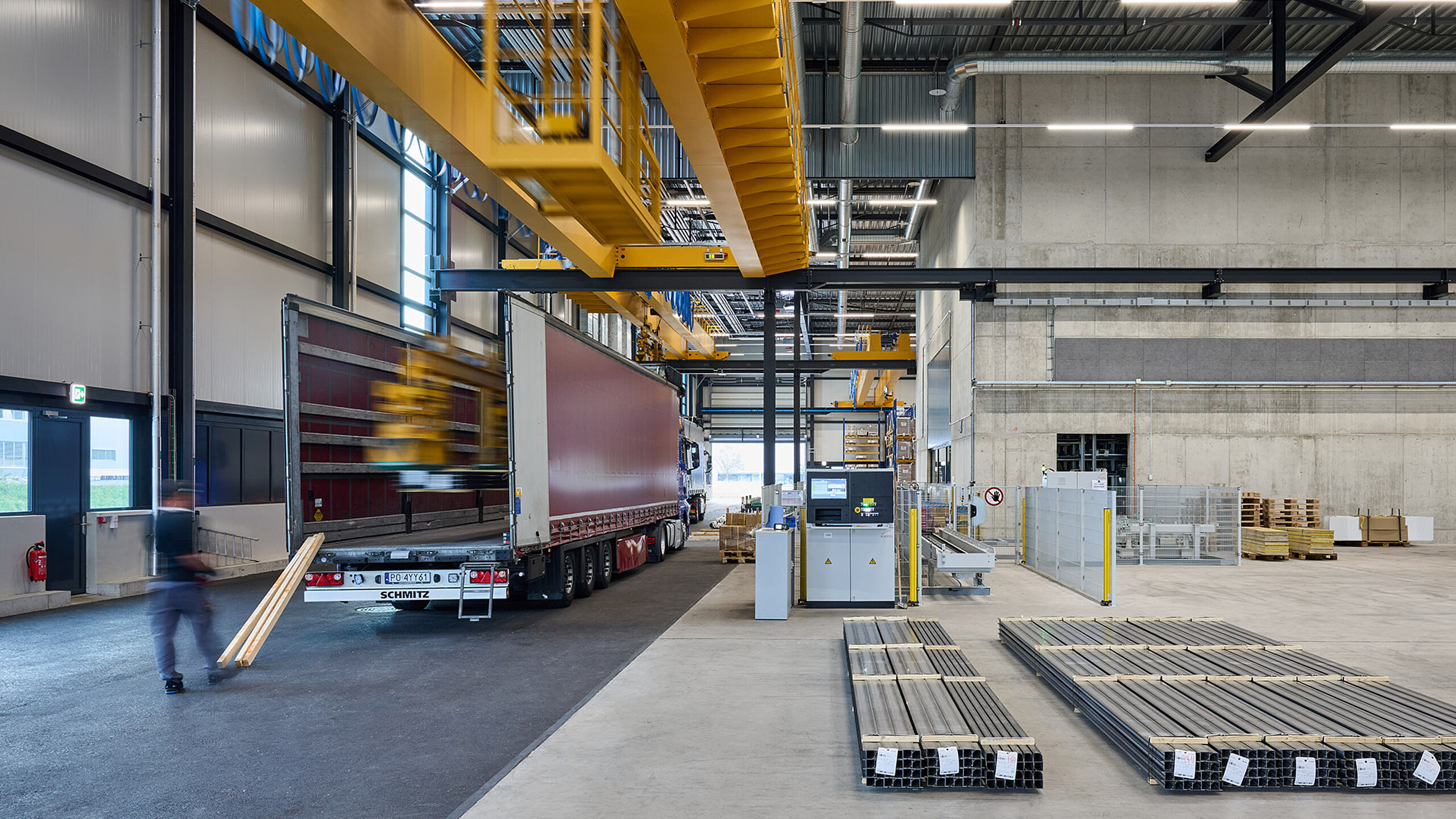
Sophisticated logistics
Delivery and goods issue are carried out separately. Photo credit: Thomas Hary, Magazin LEADER, MetroComm AG
The core component of production: automated honeycomb storage system as the pacesetter
The core component of the new production facility is the fully automated UNICOMPACT 2.5 honeycomb storage system from KASTO. With a capacity of 5,165 cassettes, the system measures 98 metres in length and 22 metres in width, providing ample space for raw materials, semi-finished products, and finished goods. Compared to the previous storage solution, it occupies a smaller footprint while significantly increasing storage capacity due to enhanced space utilisation. The production facility is divided into two sections: one side houses the production lines for forster fuego light profiles and a horizontal storage area for profiles with excess lengths. The other side contains two assembly lines for forster unico profiles and features a UNITOP 1.5 storage system for partial-pallet bundles. This system is used by Forster to store profiles that are picked individually.
Since 2014, Forster has been supplying customers with materials from the UNITOP for individual call-off orders and subsequent deliveries. The open bundles are stored until their next use in one of the 716 spaces, each of which can accommodate two different cassette formats. Fabian Strim, Manager of Production and Production Planning at Forster, states, “The storage system is reliable, low-maintenance, and straightforward - it delivers exactly what KASTO promised us. That is why we chose KASTO again, this time opting for a UNICOMPACT.” Needless to say, the UNITOP was relocated from the old site to the new campus. “KASTO assisted us with the dismantling and reassembly process, which was quite a challenge because we had to temporarily store a large amount of material and all the cassettes.”
Planned collaboratively and executed with precision: KASTO serves as the architect of material flow
The ground-breaking ceremony for the Forster Campus was held in May 2022. The new honeycomb storage system became operational as scheduled in February 2024, and by the summer of 2024, production was up and running. “The time pressure to complete the project was immense,” recalls Fabian Strim, Manager of Production and Production Planning. However, thanks to detailed planning and frequent communication with the experts at KASTO, the process went smoothly. “Our experience has been entirely positive,” he adds.
Centrally located within the hall, the UNICOMPACT supplies both production and shipping. “We opted for a combined production and picking storage system,” explains Fabian Strim. “All production facilities and loading/unloading points for lorries are organised around the storage system.” The key priority was the decentralisation of processes: “The layout of the production hall, the positioning of the storage system, and all rotary stations are perfectly coordinated with our material flows,” he emphasises.
“What impressed us from the very beginning was the close collaboration with KASTO. The team at KASTO not only excels in technology but, more importantly, understands the underlying processes. They actively listen, ask important questions, and collaboratively analyse the entire material flow chain with us. They consider where materials originate, their intended destinations, which routes are efficient, and which are unnecessary. From these discussions, KASTO developed a customised solution tailored to Forster’s specific processes. The layout of the production hall, along with the storage system positioning and rotary stations, was carefully designed to facilitate smooth material flow, enabling employees to minimise unnecessary trips to the storage system and avoid tedious searches. “We now have the optimal solution,” says Fabian Strim with satisfaction.
At the previous site, all components were stored in a horizontal storage area, which occupied a large footprint, requiring employees to walk long distances. However, with the introduction of a central storage system, everything is now readily available where it is needed. This change enhances efficiency and improves occupational safety. “Each station requiring goods has its own access gate and is supplied directly from the UNICOMPACT,” explains the Manager of Production and Production Planning. Two operating gantry cranes (OGCs) transport material bundles to the designated rotary stations. At these stations, a portal crane retrieves the profiles from the storage system and delivers them to the machine. “Eliminating indoor cranes and minimising the movement of heavy loads overhead significantly lowers the risk of accidents,” says Fabian Strim. “Automation reduces the need for manual intervention, accelerates processes, and enhances our operational value.”
Intelligent rotary stations for ensuring fast cycle times and short distances
A total of ten stations supply production and logistics with additional goods while storing and retrieving raw materials or ready-to-sell packages. For example, in production, the rotary stations have two slots, one of which is always available for returning a cassette. “This allows us to rotate quickly and change a box in just 25 seconds,” explains Fabian Strim. A roller conveyor transports the cassettes to one of two transfer points. “We need these two slots because we always join the upper and lower shells to form a profile on our production lines. Both semi-finished products are stored in the UNICOMPACT, and the ERP (Enterprise Resource Planning) system automatically requests the corresponding goods,” explains the Manager of Production and Production Planning. After removing materials from storage, a crane picks them up and places them at the machine, where an employee manually separates the bar stock. “The wide variety of different profile types makes automation at this stage uneconomical,” notes Klaus Seifermann, Sales Team Manager at KASTO.
The completed profile bundles are shipped from one of two loading points located on the opposite side of the hall. At one-minute intervals, the operating gantry crane transfers the requested goods, which are then lifted by a crane into the waiting lorries. “Forster set the pace, and we provided the solution,” says Klaus Seifermann. “It was essential to not only implement a high-performance option but also to ensure it was cost-effective.”
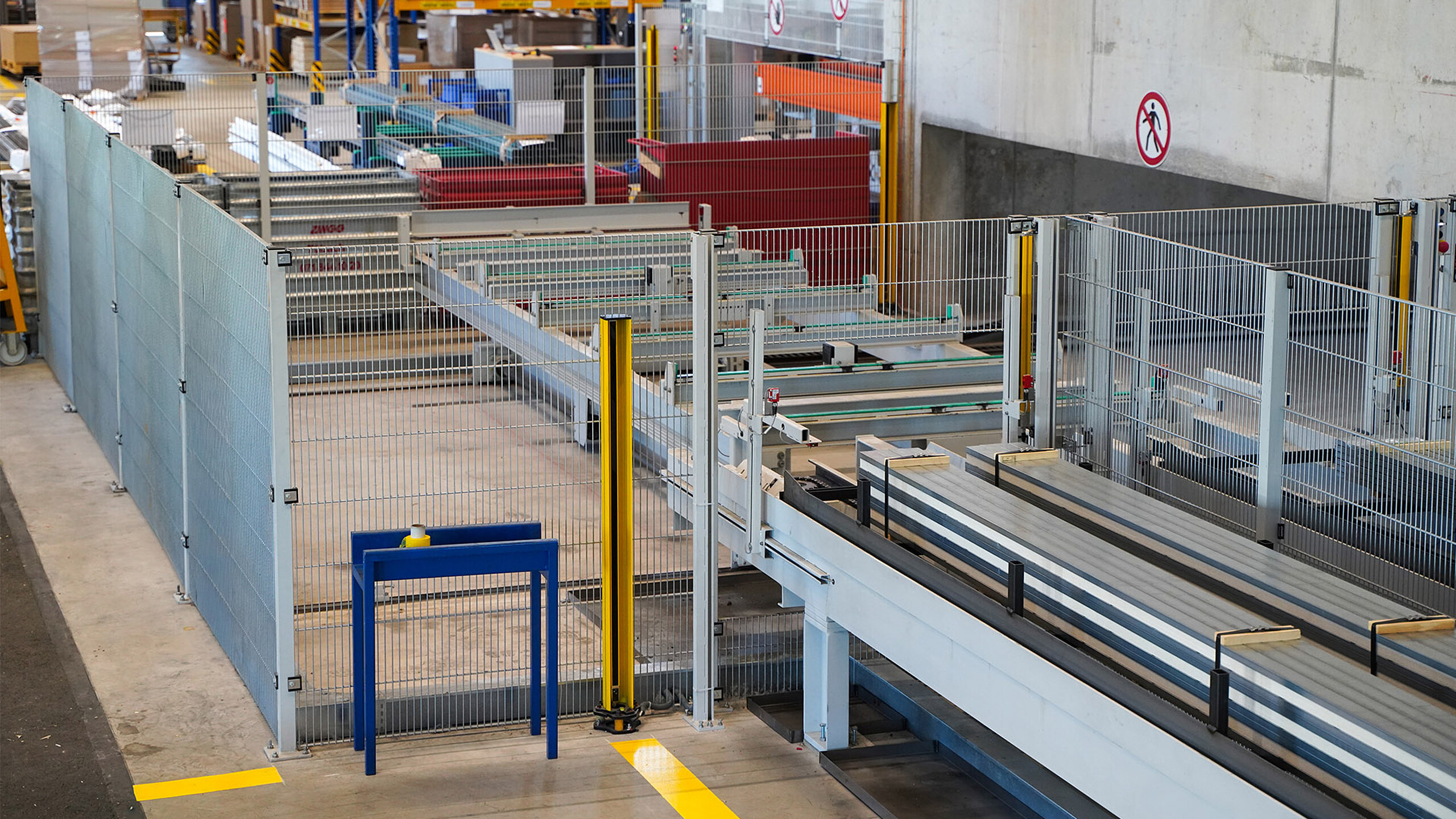
Provision of goods ready for dispatch
Rotary station for the provision of goods ready for dispatch for subsequent loading using an indoor crane. Photo credit: Thomas Hary, Magazin LEADER, MetroComm AG
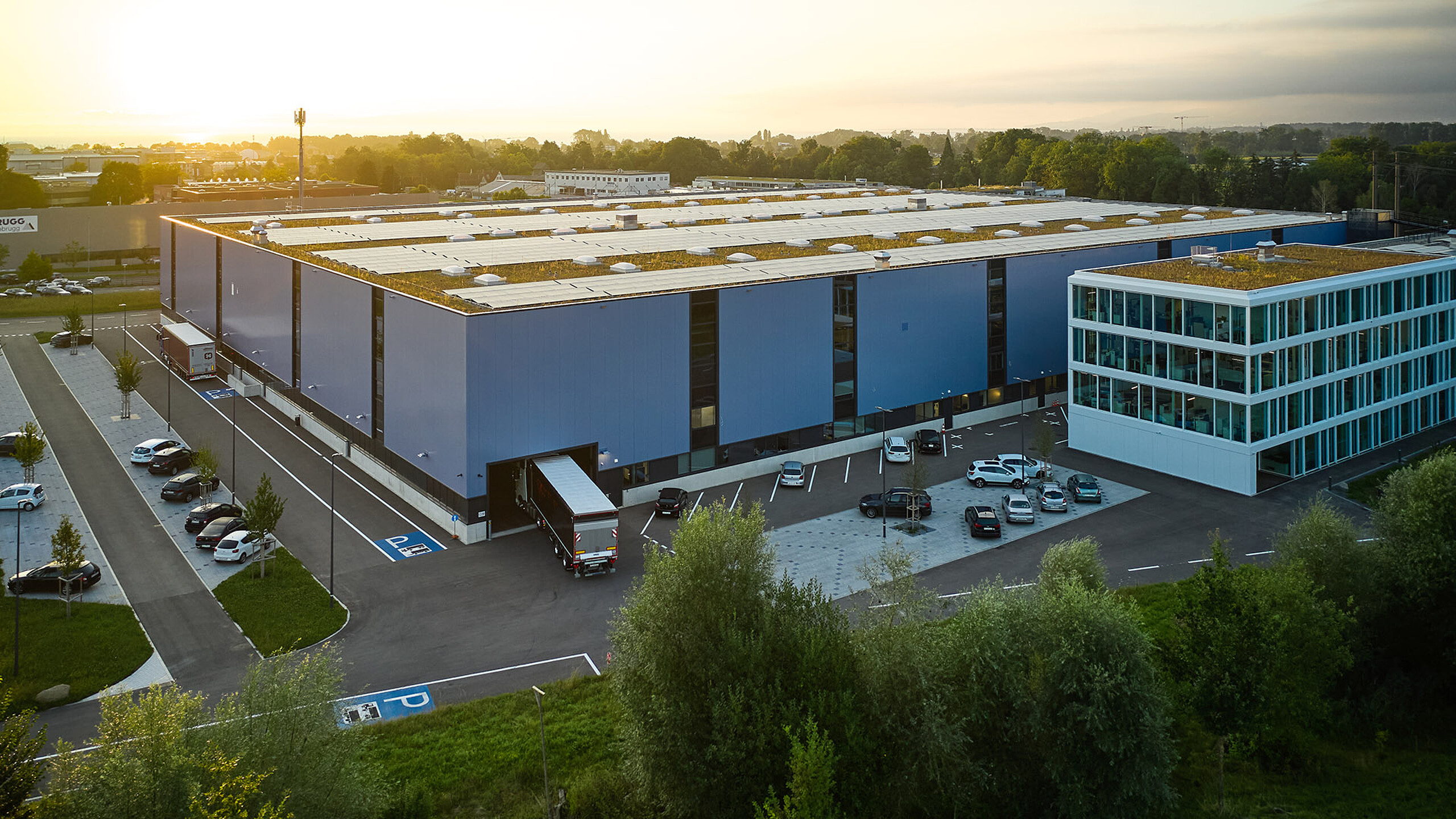
Sustainability in focus
Forster Profilsysteme AG emphasises sustainability at its new campus, generating more electricity than it consumes through its photovoltaic system. Photo credit: Thomas Hary, Magazin LEADER, MetroComm AG
Trust grows stronger with experience: humans and technology together as a team
Forster involved its employees early in the process and trained them on the new technology. Fabian Strim explains, “We have established a number of key users who provide advice and support to their co-workers. They share their expertise step by step.” Initially, for some employees it was a big adjustment to no longer access the goods directly. However, their trust in the automation grew, and now the feedback from our employees is overwhelmingly positive. When goods are delivered directly to them, their work becomes much more convenient.”
The storage system is the core of our production and logistics, and it should be operational at all times. “Of course, even the best systems can encounter malfunctions,” says Fabian Strim. “That is why having strong support is essential for us. KASTO provides us with exceptional support in this regard.”
Clever solution: storage in a pit, providing greater stability and sustainable usage of energy
The production hall has a height of 14 metres, while the UNICOMPACT storage system in its centre rises to 15 metres. How is this possible? Klaus Seifermann explains, “We placed the storage system in a pit.” This design offers several advantages. First, the hall's roof needed to be uniform in height to allow for the installation of photovoltaic modules across the entire surface. Second, the concrete enclosure of the storage system, which is set into the ground, stabilises the entire production hall, eliminating the need for a piling system in the floor”, notes Fabian Strim.
With the automated UNICOMPACT 2.5 honeycomb storage system from KASTO, Forster has optimised the material flow in the new production hall. This central storage system shortens distances, enhances supply reliability, and reduces the need for manual intervention. Combined with the sophisticated hall structure, it ensures smooth processes and efficient workflow.